

New Hires Spend Their First Month Asking Where Things Are
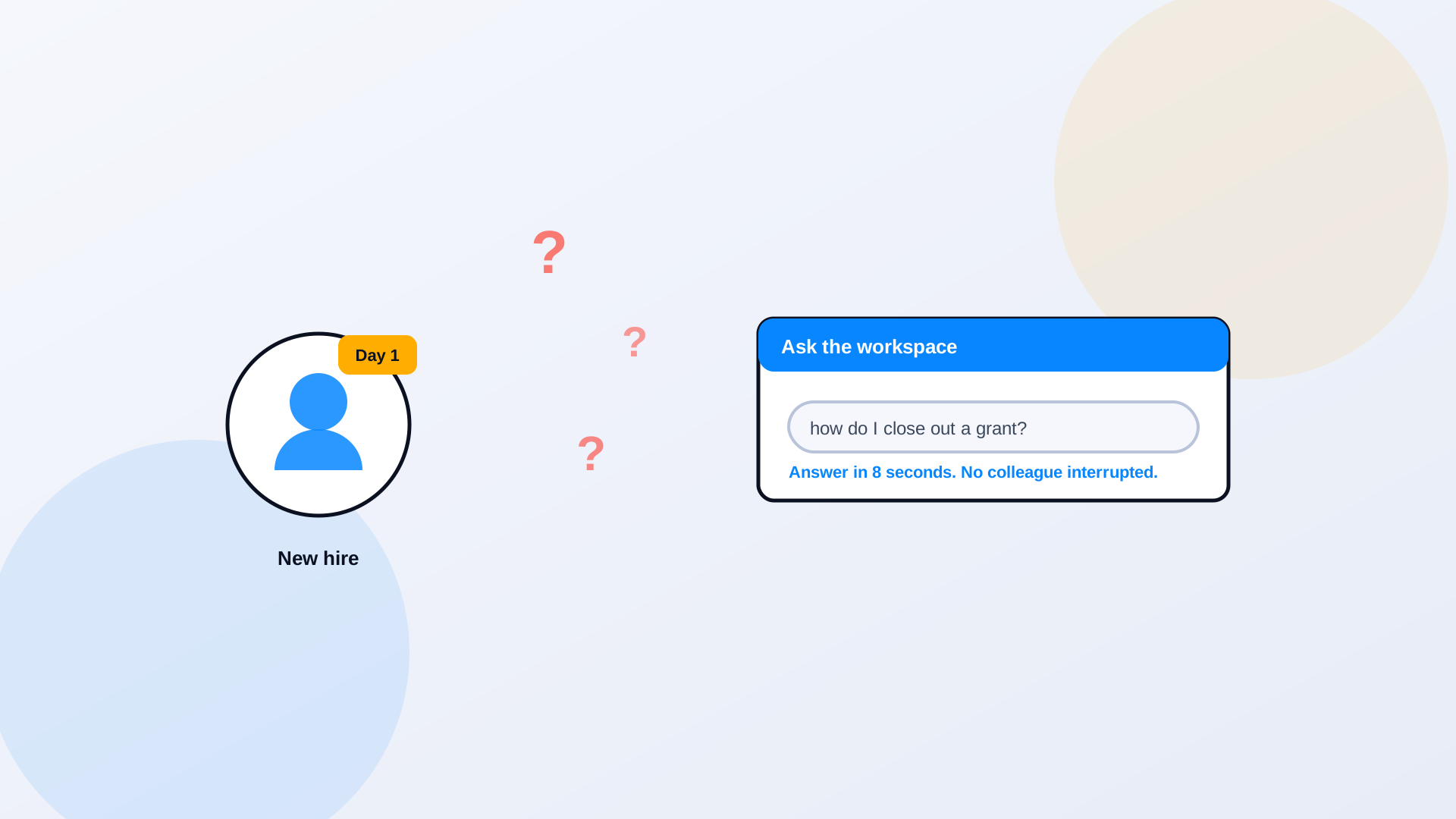
A new analyst starts on Monday. By Wednesday she's capable, motivated, and stuck. Not on anything hard. She's stuck because she doesn't know where the grant closeout template lives, which version of the travel form finance actually accepts, or who approves a purchase over a certain dollar amount. So she does the only thing available: she asks the person next to her. Who asks someone else. Three interruptions and forty minutes later she has an answer to a question that a search box could have resolved in eight seconds. Multiply that by every task in her first month.
Government onboarding has a reputation for being slow, and people usually blame bureaucracy or the pace of public-sector work. That's not it. The real drag is findability. A new hire's first weeks are mostly a scavenger hunt for information that already exists somewhere in the building, scattered across a shared drive, an intranet, a SharePoint site, and the memory of whoever's been there longest. The job isn't hard. Finding out how to do the job is. And every hour spent hunting is an hour of two people's time, the new hire's and whoever they interrupted.
Onboarding Is a Search Problem in Disguise
Think about what "getting up to speed" actually consists of. It's not learning grand concepts. It's accumulating hundreds of small, specific facts: where this lives, who owns that, which template is current, what the exception process is for the odd case. In a well-documented private company, a new hire searches an internal wiki and finds most of it. In government, that same information is real and written down, but spread across systems that don't talk, with no single place to ask. So the retrieval method defaults to the human one: find someone who knows, and ask them.
That human method has a hidden second victim. Every question a new hire asks is an interruption for an experienced employee, who stops their own work to answer it. Your most knowledgeable people become an unofficial help desk for the newest ones, which slows both of them and quietly burns your best staff on repetitive questions. The new hire feels like a burden. The veteran feels nibbled to death by interruptions. Neither is doing the work you hired them for. It's the same load we describe in why AI workplace search is replacing desktop search.
months
the typical time for a government new hire to reach full productivity
2 people
tied up every time a new hire has to ask a colleague where something lives
8s
how long the same lookup takes when one search box reaches every system
Give the New Hire the Search You Wish You'd Had
Workplace Search changes the first month by giving a new employee one box that reaches every system the agency uses. She types "grant closeout template" and gets the current file, without knowing it lives in a SharePoint subsite three departments over. She types "travel reimbursement form" and gets the version finance actually accepts, not the outdated one still floating around the shared drive. She stops needing a mental map of the agency's filing system, because the search has the map. And she stops interrupting colleagues, because she can answer her own questions the moment she has them.
The productivity math is blunt. If a new hire can self-serve the answers that used to require finding and interrupting a coworker, ramp time compresses, and it compresses on both ends: the new person gets productive faster, and the experienced person stops losing hours to being a lookup service. That freed-up expert time is not small. It's some of the most valuable time in the building, and today a lot of it goes to explaining where the closeout template lives. We put numbers to that in workplace search ROI and the cost of information silos.
Our old onboarding was basically shadowing someone for six weeks and absorbing tribal knowledge by osmosis. We gave the last two hires unified search on day one instead. Both were handling real casework by the end of week two, and my senior people stopped spending half their day answering where-is-this questions.
division manager, state agency
The onboarding fix that also fixes offboarding
Making internal knowledge searchable helps at both ends of the employment lifecycle. It gets new hires productive faster, and it means that when a veteran retires, their knowledge is already captured in searchable systems rather than trapped in their head. Solve findability once and you address the slow start and the sudden loss at the same time, with the same system.
This Is a Retention Play, Too
There's a morale cost to a bad first month that doesn't show up on any onboarding checklist. A new hire who spends weeks feeling lost, dependent, and vaguely like a nuisance forms an early impression of the job, and it isn't a good one. A new hire who can find what they need and contribute quickly feels competent and useful in the first two weeks. Early competence is one of the strongest predictors of whether someone stays. In a sector fighting hard to recruit and keep talent, the quality of the first month is not a soft concern. It's a retention lever you control.
You can't hand a new employee thirty years of institutional knowledge on their first day. But you can hand them a search box that reaches everywhere that knowledge is written down, so they spend their first month doing the job instead of hunting for how to do it. That's the difference between an onboarding that drags for a quarter and one that clicks in a couple of weeks.
Related reading
Want to see how fast a new hire could self-serve inside your own systems? Book a demo and we'll show you the first-week questions unified search answers instantly.
Ready to see it in action?
Book a demo and we'll configure Keyspider on a live sample of your content, within 48 hours.
Book a Demo