

They Qualify for the Benefit. They Can't Find the Page.
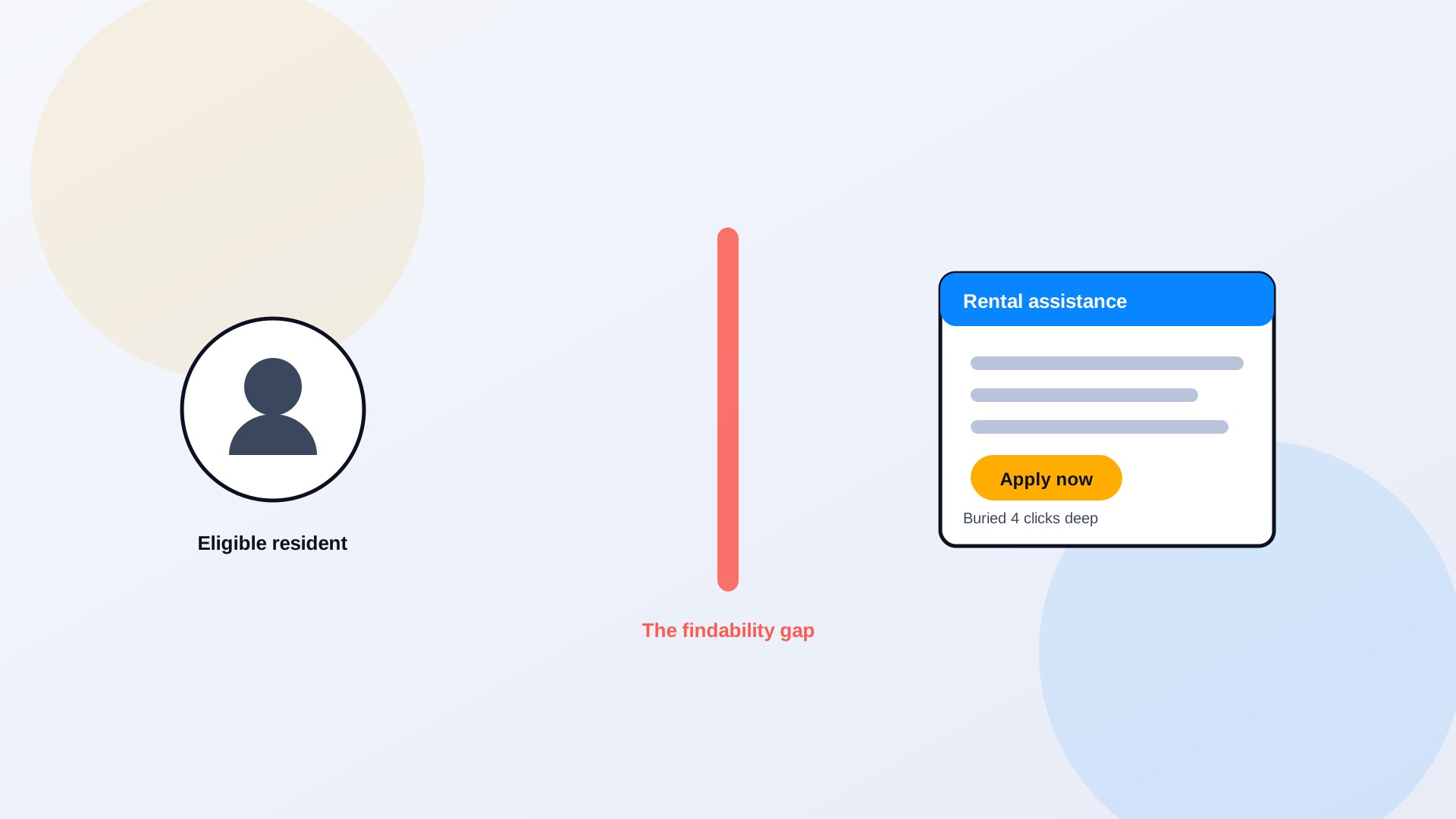
A family qualifies for rental assistance. The program is funded. The application is online. And they never apply, because they searched your site for "help paying rent," got nothing they recognized, and assumed the help wasn't there. The money sits unspent. The family falls further behind. Six months later a report notes low program uptake and someone suggests more outreach, more flyers, another mailer. But the outreach was never the problem. The page existed the whole time. It was just unfindable to the people it was built for.
This is one of the quieter failures in local government, and one of the most expensive in human terms. Eligibility and findability are two different things, and agencies spend enormous effort on the first while barely touching the second. You can nail the policy, secure the funding, and design a clean application, and none of it matters if a resident in need can't locate the page in the thirty seconds they'll spend looking before they give up. Uptake isn't decided in the budget. It's decided in the search box.
People in Crisis Search in Crisis Language
Nobody types "Emergency Rental Assistance Program" into a search bar. Someone about to lose their housing types "can't pay rent," "eviction help," "behind on rent what do I do." Your page is titled with the program's official name, written in the language of the grant that funds it. Those two vocabularies don't overlap, and keyword search lives or dies on overlap. So the query fails, the resident concludes the county offers nothing, and a program designed precisely for their situation stays invisible to them at the exact moment it was supposed to help.
It gets harder when a single need spans several programs. A senior looking for help might qualify for a property-tax exemption, a utility-assistance program, and a home-repair grant, each run by a different department, each on a different page, each named something bureaucratic. No resident is going to find all three by guessing keywords. They'll find zero, or one if they're lucky, and miss the rest. The information architecture that makes sense to your org chart makes no sense to a person with a problem.
30s
roughly how long a resident searches before deciding a service doesn't exist
3+
separate departments a single resident need often spans, each on its own page
$0
of a funded program that reaches a resident who can't find the page
Findability Is an Equity Issue, Not a UX Nicety
The residents who most need assistance programs are often the ones least equipped to fight a bad search experience. They may be searching on a phone, on a data plan, in a second language, under stress, with limited time. A confident, tech-comfortable user will try three different phrasings and dig through a navigation menu. A person in crisis tries once. When search only rewards the persistent and the fluent, the benefit flows to the people who needed it least and skips the people it was written for. That's not a neutral technical limitation. It quietly shapes who your programs actually serve. We touch on the broader stakes in government digital experience and citizen expectations.
What Intent-Based Search Does for Uptake
AI Search matches what the resident means, so "help paying rent" reaches the rental-assistance page whether or not those words appear on it. "Eviction help" reaches the same place. "I'm going to lose my apartment" reaches it too. The resident describes their situation in their own words and lands on the program built for it, on the first try, without knowing its official name or which department owns it. And a search that understands intent can surface the related programs alongside it, so the senior looking for tax help also sees the utility and repair assistance they'd never have found separately.
We ran a campaign, printed the flyers, did the press release, and enrollment barely moved. Then we fixed how the program surfaced in site search. Applications went up without a single new dollar of outreach. The people were always looking. They just weren't finding us.
human services director, city government
Where the ROI actually lands
A findability fix is one of the rare improvements that helps residents and the budget at the same time. Higher uptake means funded programs actually get used, which is what the funding was for. Fewer people call the office to ask whether a program exists, because they found it themselves. And you stop spending outreach dollars to compensate for a search box that was quietly turning people away.
Measure the Gap Before You Spend on More Outreach
Before the next mailer, look at your search logs for the queries that returned nothing. "Rent help," "food assistance," "utility shutoff," "free clinic." Every zero-result search for a service you actually offer is a resident you turned away from a program they may have qualified for. That list is the cheapest program-improvement roadmap you'll ever get, and it costs nothing to pull. Fix the searches that fail, and you raise uptake for programs you've already built and funded. The same logic drives self-service more broadly in community portal search and resident self-service.
A benefit nobody can find is, functionally, a benefit that doesn't exist. You did the hard part already: you funded it, staffed it, and put it online. Making it findable is the last, cheapest, most overlooked step, and it's the one that decides whether the program reaches the family it was written for or shows up as an unspent line item in next year's report.
Related reading
Wondering how many of your programs are invisible to the residents who qualify? Book a demo and we'll test your real services against the words people actually search.
Ready to see it in action?
Book a demo and we'll configure Keyspider on a live sample of your content, within 48 hours.
Book a Demo