

Tax Season Doubles Your Traffic. Your Search Buckles.
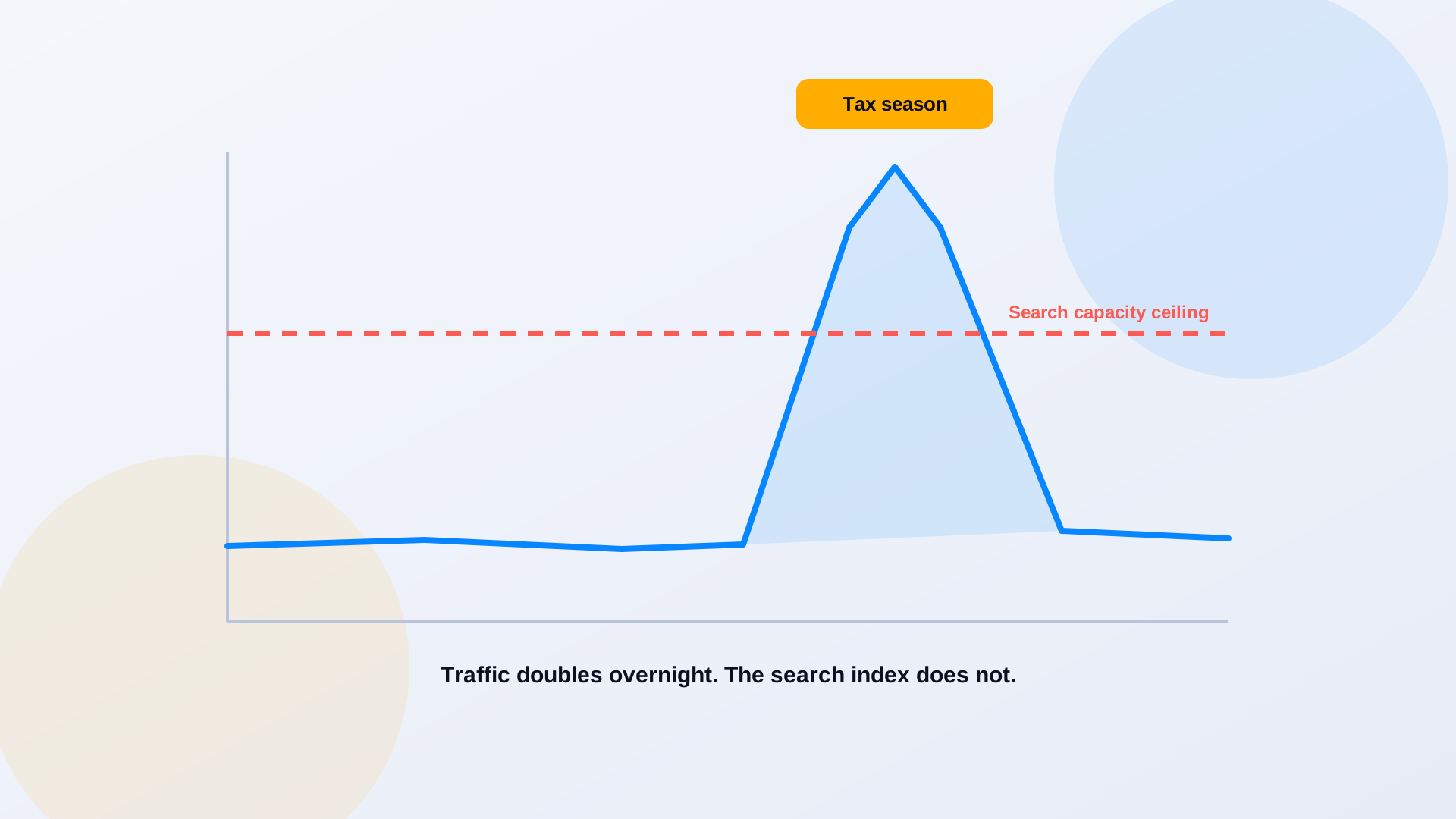
For most of the year your website hums along and nobody complains much. Then property tax bills go out, and in one week the traffic to a handful of pages triples. Everyone is searching "when is my tax due," "how do I pay online," "can I set up a payment plan," all at once, all in slightly different words. If your search handles those queries well, the surge is invisible: people find their answers and move on. If it doesn't, the surge becomes a flood of phone calls, because thousands of residents just hit a wall on the same day.
The thing about government demand is that it isn't random. It's seasonal and it's predictable. Tax deadlines land on the calendar. Storm season arrives on schedule. Open enrollment, back-to-school, voter registration cutoffs, business license renewals: every one of them concentrates a huge volume of very similar questions into a narrow window. You know they're coming. Which means the search failures they trigger are among the most preventable problems you have, if you treat the spike as a planning input instead of a surprise.
A Spike Is a Thousand People Asking the Same Thing
What makes a surge dangerous isn't just the raw volume. It's the concentration. During tax week, a large share of your visitors want one of maybe five answers, phrased a dozen ways each. "Property tax due date," "when are taxes due," "tax deadline," "last day to pay taxes," "tax bill due," all pointing at the same page. Keyword search treats each phrasing as a separate roll of the dice, and the ones that don't match your page's exact wording come up empty. So on the highest-traffic day of the quarter, your search is failing the most people it will fail all year, on the questions you could most easily have anticipated.
The failure cascades in a way that's easy to miss. Every resident whose search comes up empty during the spike doesn't just leave. A chunk of them pick up the phone, and now your call center takes the surge too, at the exact moment it's least able to absorb it. The search failure and the phone-line meltdown are the same event, one flowing into the other. Fixing search at the top of that funnel keeps the flood from ever reaching the people answering phones. That's the deflection logic we lay out in AI search for 311 call deflection.
2-3x
the traffic a small set of pages sees during a predictable seasonal spike
~5
distinct answers most surge visitors are looking for, asked many different ways
1 day
how fast a search failure becomes a call-center flood during a deadline week
Search That Understands Intent Doesn't Care How You Phrase It
AI Search matches meaning, so every version of "when are my taxes due" lands on the same due-date page whether or not the words line up. The resident who types "last day to pay" and the one who types "tax deadline" both get the answer on the first try. That's what makes a surge survivable: the search doesn't get more fragile as the phrasings multiply, because it was never matching phrasings to begin with. It's reading intent, and intent is the same no matter how ten thousand different people word it. The case for that approach is in why site search should be semantic.
Every March our phones melted down over the same five tax questions. We fixed how those queries resolved in site search before this year's cycle. Call volume during deadline week dropped noticeably, and the drop was almost entirely the simple questions people could suddenly answer themselves.
revenue office manager, city government
Use the Calendar You Already Have
You don't need a crystal ball to prepare for these. You need your own calendar and last year's search logs. Pull the queries that spiked during each seasonal event and check how they resolve today. The zero-result and weak-result searches on that list are your punch list, and you can work through it in the quiet weeks before the next surge instead of firefighting during it. Storm season, tax season, enrollment: each one is a known date with a known set of questions attached. Prep the answers ahead of the wave. That's the same feedback loop we describe in search analytics and content strategy.
Turn your worst week into a non-event
The measure of good seasonal search isn't that traffic stays flat. It won't. It's that a tripling in traffic produces no corresponding spike in phone calls, because the surge resolves itself in the search box. When your busiest week stops generating a wave of "I couldn't find it" calls, you've turned your hardest service window into one nobody has to staff up for.
Seasonal spikes are the one kind of demand you can fully see coming. That makes the search failures they cause the least excusable ones on your site. Match intent instead of keywords, walk last year's surge queries before this year's arrive, and the deadline week that used to overwhelm your phones becomes a week where the website quietly does its job.
Related reading
Know which spike is coming next? Book a demo and we'll test your surge queries against your content before the wave hits.
Ready to see it in action?
Book a demo and we'll configure Keyspider on a live sample of your content, within 48 hours.
Book a Demo