

Your Residents Are Googling Your Own Website
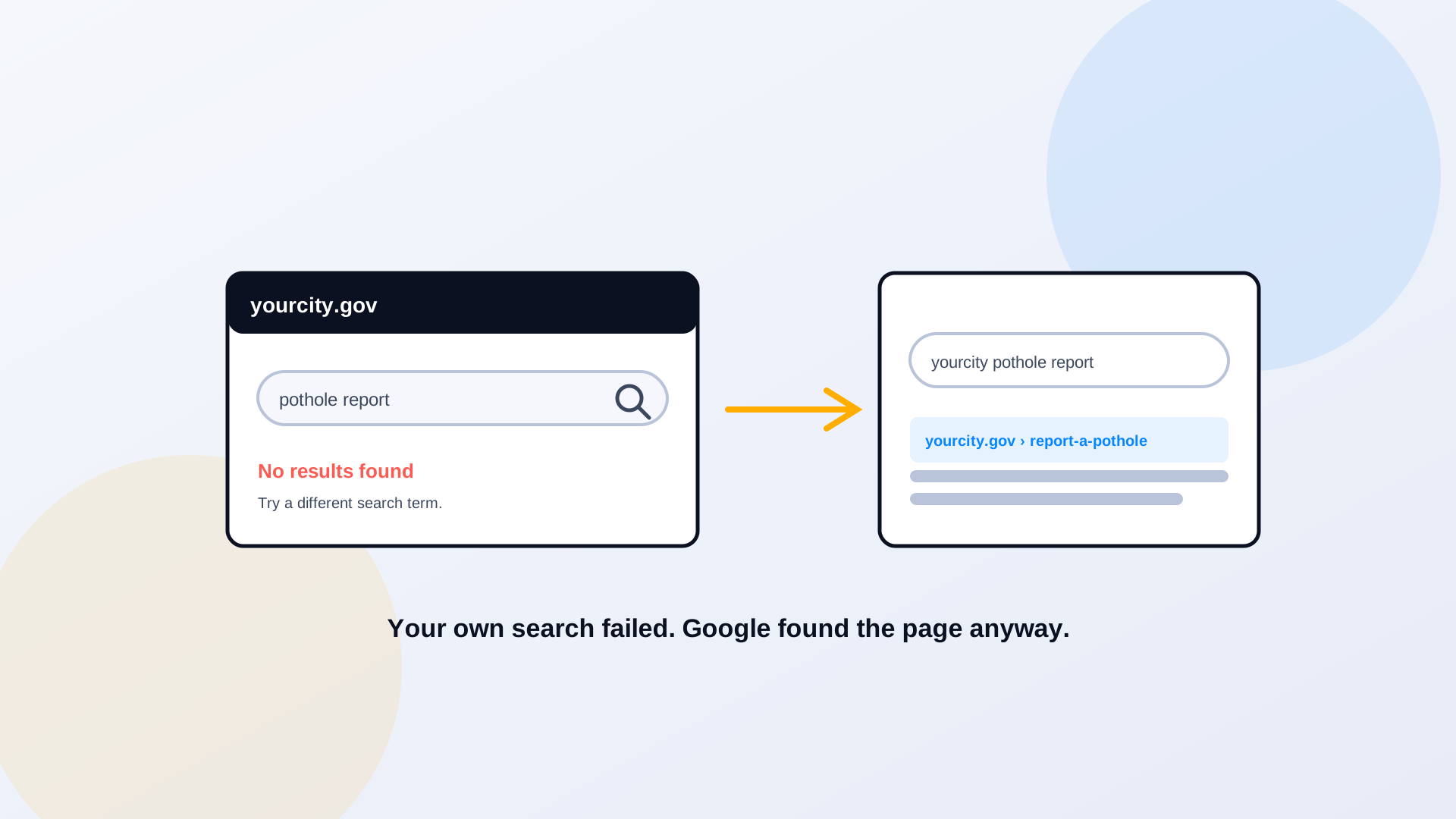
Watch a resident try to find something on a government website and you'll see the same move over and over. They type into your search box. They get nothing useful, or a list of forty links with no obvious answer. Then they do the thing that should worry you: they open a new tab, go to Google, and type "yourcity.gov pothole report." Google finds the exact page in one shot. The page that lives on your own site. The one your own search couldn't surface. People have learned not to trust the box on your homepage, so they route around it.
It feels harmless. The resident got where they were going, right? But look closer. You just taught a citizen that your website doesn't work and Google does. You added friction to a task that should've taken one step. And you handed a third party the job of connecting people to your own content, which means you've lost any ability to guide, rank, or improve that experience. The search bar on your site is supposed to be the fast path. Right now it's the detour people take to reach the off-ramp.
Why Google Beats Your Own Search on Your Own Pages
It's not magic and it's not budget. Google beats your site search because it understands what the resident meant, not just what they typed. Someone searches "my water is brown." Google connects that to your water-quality advisory page even though the page never uses the word "brown." Your keyword-matching site search looks for the literal string "brown," finds it nowhere, and returns nothing. The resident wanted an answer about discolored tap water. The page existed. The two just never met, because old-style search matches characters instead of meaning. We break down that gap in AI search versus keyword search.
Government content makes the problem worse than it is on a retail site. Your pages are written in agency language: "solid waste collection," "right-of-way permit," "delinquent tax redemption." Residents don't talk that way. They search "when is my garbage day," "can I put a dumpster on the street," "I'm behind on property taxes." Every one of those is a vocabulary mismatch that keyword search can't cross. Semantic search can, because it maps the everyday phrase to the official page regardless of the words. That's the whole argument for why site search should be semantic.
The Cost You Can't See on a Dashboard
Some of what you lose is measurable and some of it isn't. When people jump to Google, some of them never come back to the answer at all. They land on a three-year-old cached version, a news article about the policy instead of the policy, or a neighboring city's page that looks close enough. Now they're acting on wrong information, and the next contact you get is a phone call built on a misunderstanding. The search failure didn't just add a step. It seeded a support ticket.
0 results
the most common outcome when a resident's plain-language query hits keyword search
40+
blue links a typical government search returns instead of one clear answer
1 tab
how quickly a frustrated resident leaves your site for Google
There's also a content-strategy blind spot hiding in here. When residents search on Google instead of on your site, their real questions never show up in your search logs. You lose the single richest source of feedback you have: the exact words people use when they can't find something. Fix the search box and those queries come home, which tells you precisely what content to write, fix, or promote next. We get into that feedback loop in search analytics and content strategy.
We assumed our search was fine because traffic looked healthy. Then we saw how many people were arriving on deep pages straight from Google, skipping our homepage and our search entirely. Our own site had become something people navigated from the outside.
digital services manager, county government
What Changes When the Box Actually Works
AI Search closes the gap by matching intent instead of strings. "My water is brown" reaches the advisory. "Behind on property taxes" reaches the redemption page. "Garbage day" reaches the collection schedule. The resident types the question the way they'd say it out loud and lands on the right page without a second attempt, without a Google detour, and without learning to distrust your site. And because it's your search, you control the ranking, so the current page beats the outdated one instead of losing to it the way it does on the open web.
A quick test you can run this week
Pull your ten most-requested services. Search each one on your site using the words a resident would actually use, not your internal terminology. Count how many return the right page in the top result. Then run the same searches on Google with your domain name in front. The gap between those two numbers is exactly how much trust you're leaking to a search engine you don't control.
The goal isn't to beat Google at web search. It's to make sure a resident who's already on your site, ready to get something done, never has any reason to leave it. When the box on your homepage answers the question the way people ask it, the new-tab reflex disappears. Your content stops being something people reach around your site to find, and starts being something your site actually delivers.
Related reading
Want to see how many of your top services fail your own search today? Book a demo and we'll run your real queries against your real content.
Ready to see it in action?
Book a demo and we'll configure Keyspider on a live sample of your content, within 48 hours.
Book a Demo