

Every Department Bought Its Own Search. Nothing Talks.
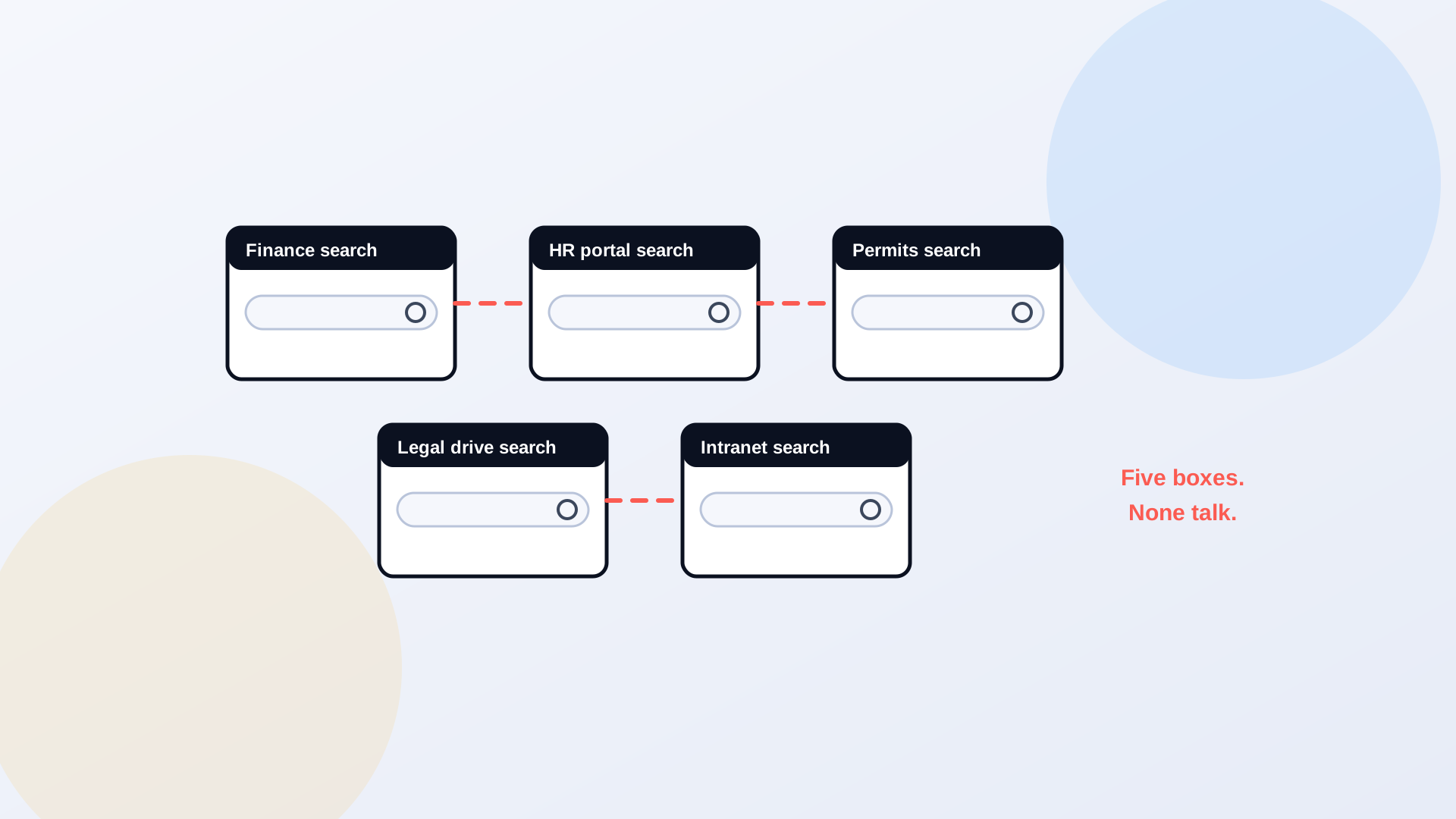
Nobody planned it this way. Finance rolled out a document system with a search feature. HR stood up a portal that came with its own. The permits office moved to new software, and it had search built in too. Legal kept everything on a network drive. Over a decade, department by department, your agency accumulated five, six, eight separate search boxes, each one competent inside its own walls and blind to everything past them. No single decision created the mess. It assembled itself, one reasonable purchase at a time.
Here's the problem with that arrangement: the questions employees actually have don't respect the org chart. "What's our travel reimbursement policy and which form does finance need" touches HR and finance. "Has this parcel had a code violation and is there an open permit" touches two systems and maybe a third. The real work of government crosses departments constantly, but every search box you own can only see its own department. So the one query that matters, the cross-cutting one, is precisely the one no box can answer.
Each Box Works. The Collection Doesn't.
This is the trap of per-system search. Judged individually, each tool is fine. Finance search finds finance documents. HR search finds HR documents. Every vendor demo looked great because it searched its own content well. But an employee doesn't experience your tools individually. They experience the whole, and the whole has no front door. To find something, they first have to guess which of eight systems holds it, then remember whether they even have access, then recall that system's particular search quirks. Most people won't run that gauntlet. They'll go ask a colleague instead, which is slower for everyone and puts you right back in the ask-Dave trap.
And the fragmentation compounds quietly. Every new system you buy adds another island, another login, another search box that can't see the others. The map of where-things-live gets more complicated every year, and it exists only in the heads of your longest-tenured staff. New hires inherit none of it. When one of those veterans leaves, a chunk of the map leaves too, which is the exact scenario we walk through in the one person who knows where everything is just gave notice.
~20%
of the workweek knowledge workers lose hunting for information across systems
6-8
separate search boxes a typical agency accumulates over a decade of purchases
1
unified search box employees actually want in front of all of it
The Answer Isn't Ripping Everything Out
The instinct is to consolidate the systems themselves: one mega-platform to rule them all. That project is a multi-year, budget-eating migration that governments rarely finish and often regret. You don't need it. The systems can stay exactly where they are. What you need is a layer of search that sits across all of them, indexes their content, and gives employees one box that reaches everything. Workplace Search does that. It connects to SharePoint, network drives, your intranet, document management, and the rest, and lets someone ask one question that searches all of them at once. The islands stay islands. You just build the bridge.
That distinction matters for procurement and for risk. You're not replacing systems staff already know, retraining everyone, or betting a two-year timeline on a rip-and-replace. Permissions stay intact, because unified search respects each source's existing access controls: someone only sees results they were already allowed to see. The change employees notice is small and immediate. One box instead of eight. We made the fuller cost case in workplace search ROI and the cost of information silos.
We almost signed off on a giant platform migration to fix this. Instead we put one search layer over the systems we already had. Same tools, same data, but now a code officer can check permits, violations, and the property file from a single box. The migration would've taken three years. This took a quarter.
IT director, county government
The question that exposes the problem
Ask your staff to find something that lives in a department other than their own. Watch what they do. If the honest answer is "I'd email someone over there and wait," you don't have a search problem in any one system. You have a missing layer across all of them, and the cost is paid in interruptions and delay every single day.
One Box Is What Everyone Assumed They Already Had
The strange part is that employees expect this to already work. They live in a world where one search bar answers anything, so the first time a new hire realizes your agency has eight boxes and none of them talk, they're genuinely confused. Unified internal search doesn't feel like a new capability to them. It feels like the obvious thing finally working the way it always should have. That expectation is why the change lands so well: you're not selling staff on a new habit, you're removing a daily frustration they'd stopped complaining about because they assumed it was just how government worked.
You bought good tools. The mistake was never buying them. It was assuming that because each one could search itself, your agency could search itself. It can't, not until something sits across the whole collection. Put one box in front of all of it, and the cross-department question, the one your staff ask a dozen times a day, finally has somewhere to go.
Related reading
Curious how many search boxes your staff are juggling and what a single one would surface? Book a demo and we'll index a slice of your real systems to show you.
Ready to see it in action?
Book a demo and we'll configure Keyspider on a live sample of your content, within 48 hours.
Book a Demo