

Content Effectiveness Scoring
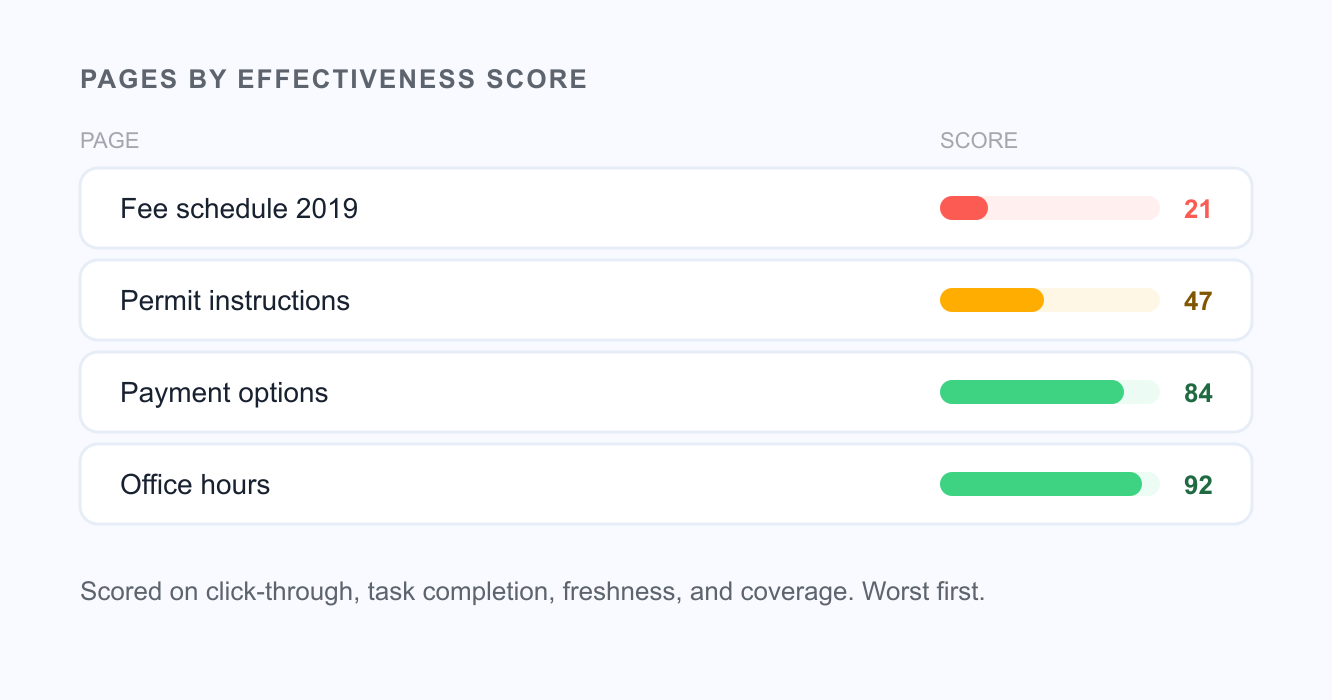
Your content team has 4,000 pages and one afternoon. Which do they fix? Most tools answer with a meta-tag checklist, which tells you a page is technically fine while real people bounce off it every day. This is different. Keyspider scores each page on what visitors actually do with it in search: do they click it, do they stay, does it answer what they came for. The pages dragging your site down rise to the top of the list.
How it works
Measure real interactions
Keyspider records how each page performs when it appears in results: how often it's clicked from a given position, and whether the visitor keeps searching afterward or stops because they found their answer.
Combine the signals
Click-through, task completion, freshness, and how well the page covers what people are actually searching for roll into one score. A page can look healthy on paper and still score low here.
Work the list
Sort worst-first and your team sees exactly where its hours pay off. Fix a page, and its score climbs on its own as visitors respond.
Use cases
Government web teams
A two-person team can't audit a 6,000-page site by hand. Effectiveness scoring points them at the thirty pages residents struggle with most, this quarter.
Higher education
Departments publish constantly and nobody owns the whole site. The score shows which faculty pages fail students in search, so central web can target help where it counts.
Content migrations
Before a redesign, the score separates the pages worth carrying over from the ones nobody finds, so you rebuild what matters instead of porting dead weight.
Ready to give your users better answers?
AI Search, AI Assistant, and Workplace Search. Deployed in days, not months. See it live on your own content.
No credit card required · Live in 2 weeks · Cancel anytime