

Your Phones Ring Because Your Website Won't Answer
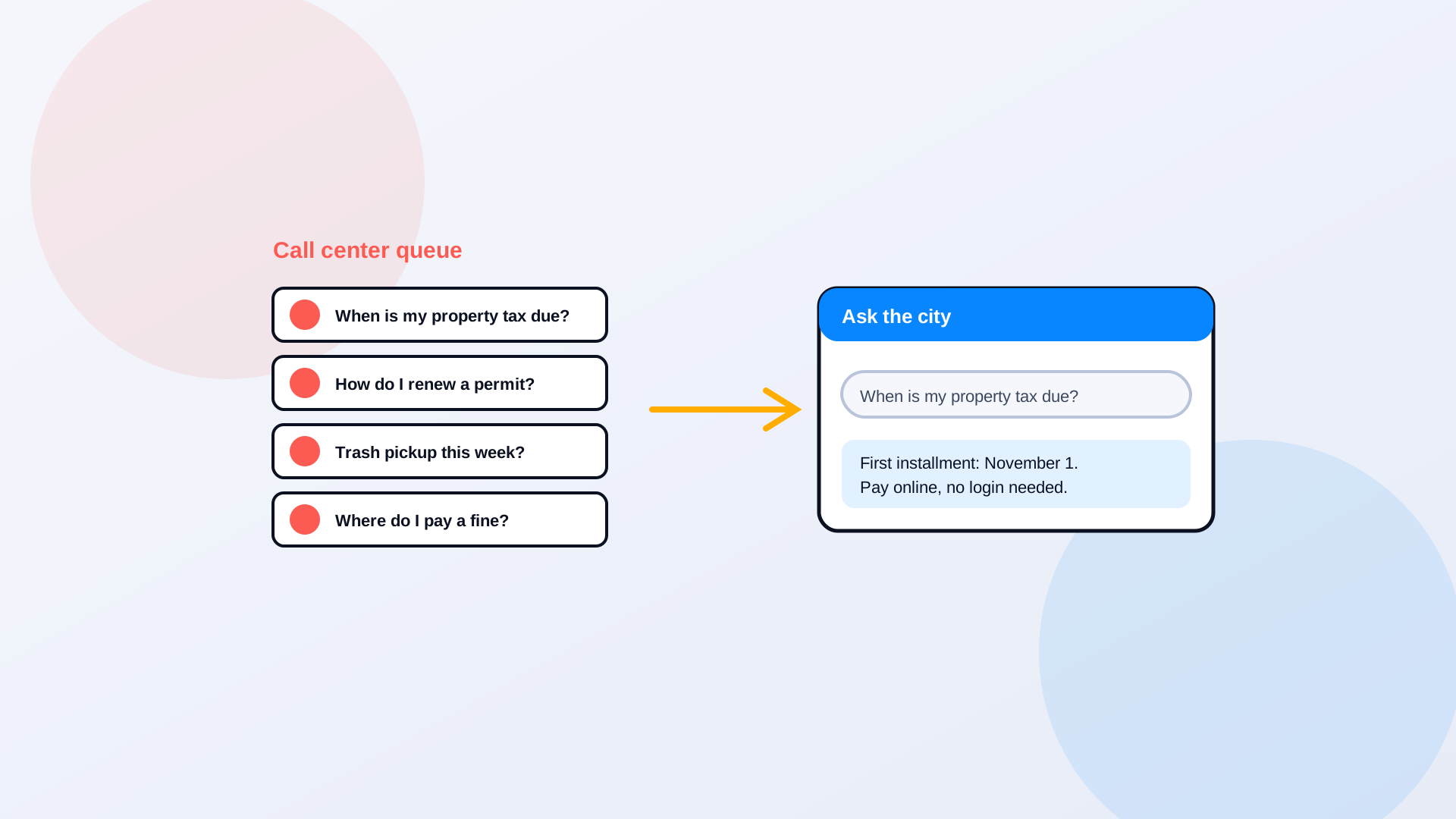
Nobody wants to call a government office. Not the resident, who knows it means hold music and a lunch-hour phone tree. Not the staff, who field the same handful of questions all day. And yet the phones ring constantly, because for most people the call isn't a first choice. It's what they do after the website let them down. They looked for the answer online, couldn't find it, and picked up the phone as a last resort. Every one of those calls started as a failed self-service attempt you never saw.
That reframes the whole call-volume conversation. When leadership talks about the phones being overwhelmed, the usual response is about staffing: more people, longer hours, a better phone system. But a large share of that volume is questions the website should have answered and didn't. "When is my property tax due." "How do I renew a permit." "Is trash pickup on for the holiday." These aren't calls that need a human. They're calls that exist only because self-service failed upstream.
Count the Calls That Never Needed a Person
Sit with a call log for an afternoon and sort the calls into two piles. One pile genuinely needs a human: a complicated appeal, a dispute, an unusual situation that requires judgment. The other pile is pure information retrieval, a fact that lives on a page somewhere, read aloud by a staff member because the resident couldn't find it themselves. In most government offices that second pile is enormous. It's the same ten or fifteen questions, over and over, consuming hours of staff time to deliver answers that were already published on the website.
The reason those answers don't get self-served is that a static website is a bad question-answering tool. It's organized by the agency's structure, not the resident's question. To find the tax due date, you have to know it lives under the treasurer's page, then find the right sub-page, then spot the date in a block of text. A resident who doesn't know your org chart gives up two clicks in and dials the number at the top of the page. The information was there. The path to it wasn't.
10-15
distinct questions that make up the bulk of routine call volume
most
of those calls are pure fact-lookups a website could handle
0
judgment required to tell someone their trash day
An Assistant Answers the Question. A Page Just Holds It.
The fix isn't more pages or a better menu. It's turning the website from a place that stores answers into one that gives them. Gen AI Chat lets a resident ask their actual question, in their own words, and get a direct answer pulled from your published content. "When's my property tax due" comes back with the date and a link to pay, not a list of nine pages that might contain it. The resident gets the answer, the call never happens, and the staff member who would've taken it is free for the appeal in the other pile that genuinely needs them.
Grounding is what makes this safe for government. The assistant answers only from your approved content, so it won't improvise a deadline or invent a policy. When it doesn't have a confident answer, it routes the resident to the right human channel instead of guessing. That guardrail is the whole point: you deflect the routine questions without ever putting wrong information in a resident's hands. And the calls that reach staff are now the ones that actually merit a person, which is a better use of everyone's time. We cover the automation-versus-human line in chatbot vs live chat for government.
We were about to ask for two more front-desk positions to handle call volume. Before we did, we added an assistant to the website that answered the top questions directly. The routine calls dropped enough that we held off on hiring and reassigned staff to the casework that was actually backing up.
operations director, city government
The deflection dividend
Every routine question answered on the website is three things at once: a resident who got a faster answer, a call that never entered the queue, and a staff member freed for work that needs a human. You're not cutting service. You're moving the simple stuff to self-service so the people on the phones can spend their attention where it counts.
The Phone Should Be for Problems, Not Facts
There's a version of good government service where the phone line is reserved for the situations that genuinely need a conversation, and every simple fact-lookup gets handled the moment a resident asks it, at any hour, without a call. That's not a fantasy of replacing staff with robots. It's just putting the right channel on the right kind of question. Facts belong on a website that can actually surface them. Judgment, empathy, and messy exceptions belong with a person. Right now your phones carry both, and the facts are crowding out the problems.
Before the next request for more phone staff, look hard at what those staff spend their day saying. If most of it is reciting information that's already on your website, you don't have a staffing shortage. You have a website that won't answer, and the phones are absorbing the difference. Fix the answering, and the ringing settles down on its own.
Related reading
Want to know how many of your calls the website could have answered? Book a demo and we'll map your top call reasons against what's already published on your site.
Ready to see it in action?
Book a demo and we'll configure Keyspider on a live sample of your content, within 48 hours.
Book a Demo