

It's 9 PM and a Resident Needs an Answer. Now What?
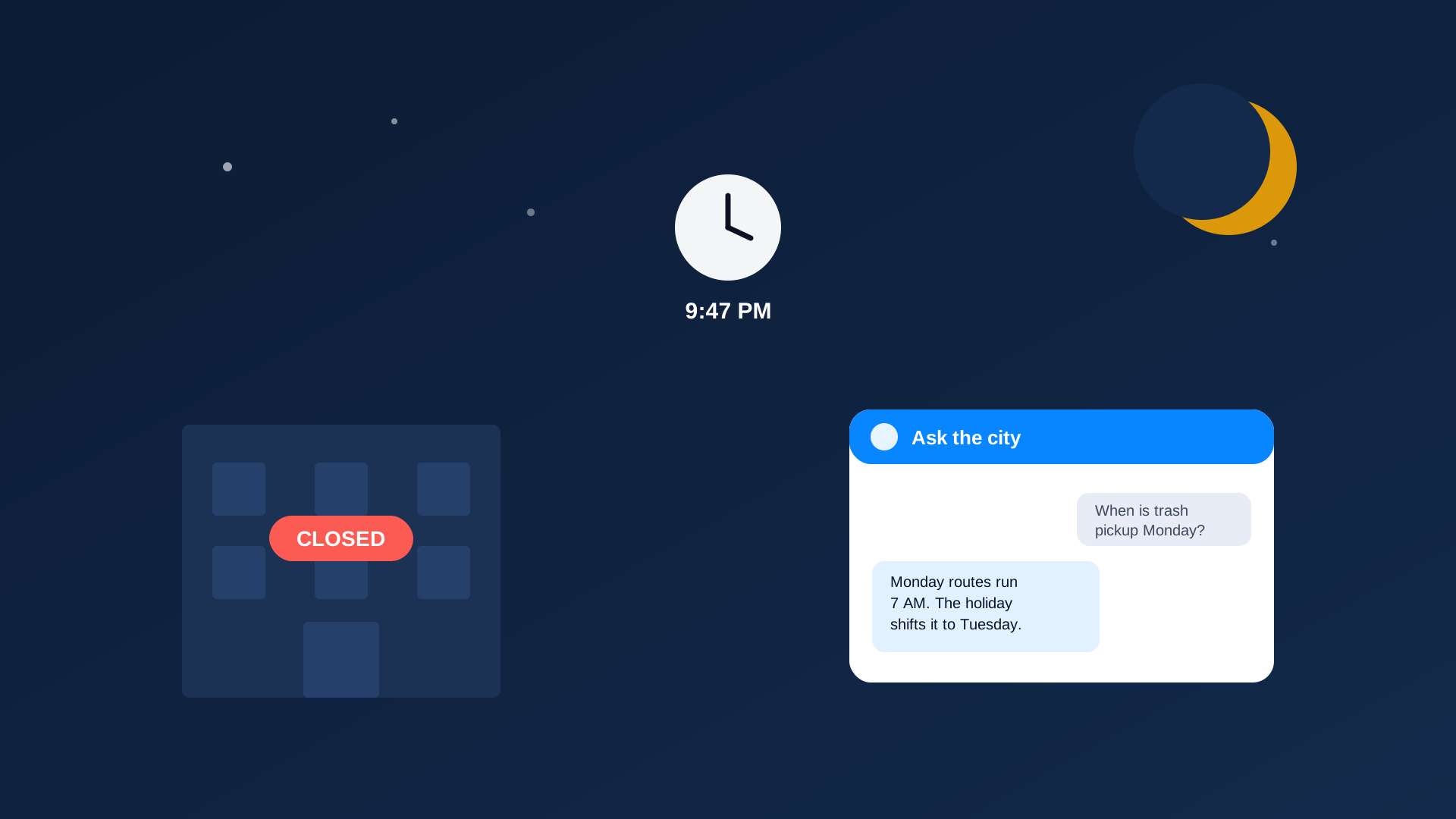
The clock says 9:47 PM. A resident just got home from a second shift, remembered that trash pickup might be off because of the holiday, and pulled up the city website to check. Your office closed at five. The phone line plays a recording. The contact form promises a reply within two business days, which is useless to someone who needs to know whether to drag the can to the curb tonight. So they guess. And half the time they guess wrong, and now there's a missed pickup, a complaint, and a phone call in the morning that a machine could have handled the night before.
Here's the part that surprises most agency leaders when they finally look at the timestamps: the questions don't stop when the office does. They shift. People deal with government business on their own time, which is evenings and weekends, because that's when they're not at their own jobs. The demand is there at 9 PM. The staffing isn't. That gap is where frustration lives, and it's bigger than most agencies realize until someone actually pulls the web analytics and sees when residents are showing up.
Most Contact Happens When Nobody's There
Look at the traffic pattern on almost any city or county site. It climbs through the afternoon, and a big share of it lands outside business hours. Evenings. Lunch breaks. Sunday nights when someone's finally sitting down to sort out a permit or a bill. During all of those windows, the only thing answering is your website, and a static website answers exactly the questions its navigation happens to anticipate. Everything else, the specific, real, slightly-off question a person actually has, gets no answer at all.
The fallback options make it worse, not better. A phone tree at 9 PM is a dead end with hold music. A contact form is a message in a bottle. And search bars on most government sites return a wall of blue links or, worse, nothing, which sends the resident straight to Google or straight to giving up. None of that is an answer. An answer is a specific sentence that resolves the specific question, delivered in the moment the person is asking it.
60%+
of resident website visits that commonly land outside normal 9-to-5 office hours
0
staff answering the phone at 9 PM on a Tuesday
2 days
the typical contact-form reply window, long after the question stopped mattering
A Search Box Retrieves. An Assistant Answers.
There's a real difference between finding and answering, and it matters most after hours when no human is there to bridge the gap. Traditional site search hands back documents and hopes the resident reads the right paragraph on page four of a PDF. Gen AI Chat reads that paragraph for them and replies in plain language: "Monday routes run at 7 AM, but the holiday pushes your pickup to Tuesday." One sentence. Grounded in your own published schedule, not invented. The resident gets the answer and closes the laptop, and nobody files a complaint in the morning.
The trust question comes up fast, and it should. Government can't have a chatbot confidently making things up about tax deadlines or permit rules. That's the whole reason grounding matters: the assistant only answers from your approved content, and when it doesn't have a source, it says so and points to a human channel instead of guessing. We wrote about that failure mode and how to prevent it in how to keep Gen AI chat from hallucinating.
We turned it on expecting to deflect a few trash and permit questions. What we didn't expect was the volume at night. A third of the conversations happen after we've all gone home, and those are people we were simply never reaching before.
communications director, mid-size city
Nights and Weekends Are Also a Language Problem
The after-hours gap hits hardest for the residents who already have the hardest time reaching you. Someone whose first language isn't English, working a shift job, trying to sort out a benefit application at 10 PM, has almost no path to a live person even during business hours. An assistant that answers around the clock and answers in the resident's language closes two gaps at once. That's not a nice-to-have in a jurisdiction covered by Executive Order 13166 and Title VI language-access obligations. It's the difference between a service that technically exists and one people can actually use. More on that in our piece on multilingual AI chat for county and city government.
What after-hours coverage does to your morning
The calls you get at 8:05 AM are largely the questions that piled up overnight with no way to get answered. Deflect those the night before and the first hour of the workday stops being a scramble to clear a backlog. Your staff starts the day on real casework instead of reciting the trash schedule for the fortieth time.
You're Not Replacing Staff. You're Covering the Hours They Can't.
The fear in the break room is always that an assistant is a headcount cut in disguise. It isn't. Your team can't work 24 hours a day, and you were never going to hire a night shift to answer questions about recycling. The assistant covers the hours the building is empty and hands off anything genuinely complex to a person during the day. Staff stop absorbing the flood of simple, repeated questions and get their attention back for the cases that actually need judgment. That's the same argument we make for daytime volume in running a 24/7 citizen chatbot when your call center is short-staffed.
A resident at 9 PM doesn't care that your office hours ended four hours ago. They have a question and they want an answer, and if your site can't give it, their opinion of the whole agency drops a notch. Keep the building answering after the lights go off, and you turn your worst service window into one that quietly works.
Related reading
Curious what your own after-hours traffic is really asking? Book a demo and we'll show you the questions your site is failing to answer tonight.
Ready to see it in action?
Book a demo and we'll configure Keyspider on a live sample of your content, within 48 hours.
Book a Demo